





Difference Between Pressure Washing and Soft Washing
Every homeowner eventually faces a dirty exterior and a simple question: how should it be cleaned? Walk into any hardware store or browse any exterior cleaning company website and you will encounter two methods described in different ways but rarely explained side by side with enough clarity to make a confident decision. This guide covers exactly that. It breaks down the difference between pressure washing and soft washing, explains what each method actually does at a technical level, identifies which surfaces belong to which method, and helps you understand why choosing wrong costs more than choosing right.
The confusion is understandable. Both pressure washing and soft washing involve water and a spray nozzle, and at a glance they can appear identical. But the methods are fundamentally different in pressure level, chemical application, and the type of cleaning result they produce. Using high pressure on surfaces designed for low pressure does not clean them faster. It damages them. Cedar shake siding, wood panel siding, stucco, painted wood, and asphalt shingles are all surfaces that can be permanently compromised by pressure washing applied without proper knowledge of the surface type.
The damage is not always visible immediately. Stucco that has been stripped of its surface texture by high pressure looks fine at first but begins to absorb moisture at an accelerated rate within weeks. Asphalt shingles blasted with a pressure washer lose the granular coating that protects them from UV degradation. Painted wood and wood panel siding can have their paint film lifted entirely, leading to rot underneath. Each of these outcomes is preventable when the right method is applied to the right surface.
Understanding pressure washing vs soft washing means understanding the science behind each approach, not just the equipment. This guide gives you the framework to make the right call for every surface on your property.
What Is Pressure Washing? Definition and How It Works
Pressure washing is a cleaning method that uses a motorized pump to force water through a nozzle at significantly elevated pressure, typically ranging from 1,500 PSI to 4,000 PSI depending on the machine and application. The force of the high pressure water stream is the primary cleaning agent. It physically dislodges and removes surface-level contaminants such as dirt, mud, oil stains, gum, and loose paint from hard, durable surfaces.
The defining characteristic of pressure washing is its reliance on mechanical force. A high pressure stream can remove years of accumulated grime from concrete, brick, and hardscapes in a fraction of the time that would be required using conventional scrubbing methods. The water volume delivered at that pressure is sufficient to cut through compacted material that would otherwise resist standard cleaning.
Surfaces Well-Suited to Pressure Washing
Not every surface can handle high pressure water. The surfaces that benefit from pressure washing are dense, non-porous, or sealed materials that can withstand the mechanical force without absorbing moisture or losing structural integrity:
- Concrete driveways, sidewalks, patios, and pool decks
- Brick walkways, retaining walls, and hardscapes
- Paved surfaces, pavers, and stone hardscapes with minimal mortar exposure
- Metal surfaces including fences, railings, and equipment
- Sealed wood decks in good structural condition

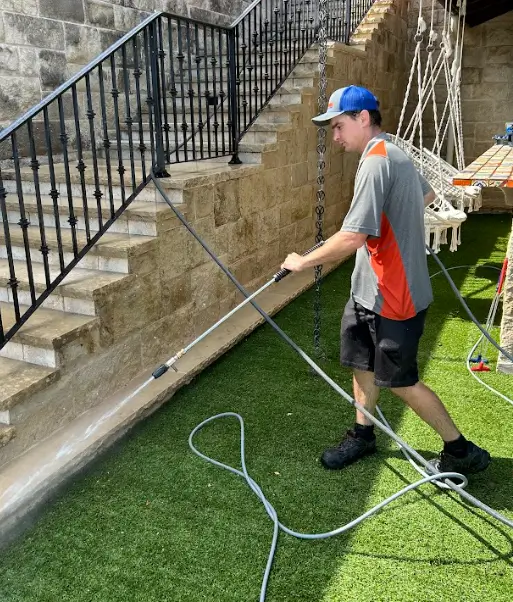
Hartmann’s professional pressure washing services use a 3,600 PSI surface cleaner specifically designed for concrete and hardscape surfaces. This equipment delivers the mechanical force needed to remove oil stains, organic growth, and heavy grime from dense surfaces without the risk of over-spraying high pressure onto adjacent siding, windows, or landscaping.
What Is Soft Washing? Definition and How It Works
Soft washing is a cleaning method that applies biodegradable cleaning solutions to a surface at low pressure, typically 500 PSI or below, and allows the chemistry to do the work rather than mechanical force. The low-pressure washing technique delivers a cleaning agent that penetrates and breaks down organic growth including mold, mildew, algae, lichen, and bacteria at the biological root level. Once the solution has completed its dwell time, the surface is rinsed at low pressure to remove the neutralized organic matter and the cleaning agent.
The critical distinction in soft wash vs pressure wash is that soft washing does not rely on water pressure to clean. The biodegradable cleaning solutions used in professional soft washing contain surfactants, sodium hypochlorite in appropriate dilutions, and other agents formulated to break apart organic matter chemically. This is what makes removing mold and algae at the root possible with soft washing: the biology is killed and dissolved, not just physically displaced. When mold or algae is only blasted off by high pressure without chemical treatment, the root system remains on the surface and regrowth occurs significantly faster.
Surfaces That Require Soft Washing

Any surface that would be damaged, etched, cracked, or stripped by high pressure water is a candidate for the low-pressure washing technique. These are typically building envelope materials and finished surface
- Cedar shake siding and wood panel siding of all types
- Stucco and synthetic stucco (EIFS) exteriors
- Painted wood trim, fascia, and soffits
- Asphalt shingles and roof surfaces
- Brick and natural stone on building facades
- Vinyl siding and composite cladding
- Screen enclosures and outdoor structures
Professional soft house washing uses this low-pressure washing technique with biodegradable cleaning solutions to safely treat the full exterior of a home, including stucco, vinyl siding, brick facades, painted wood trim, and cedar shake siding without the surface damage risk that comes with applying high pressure to building materials not designed to handle it.
Pressure Washing vs Soft Washing: The Core Differences Explained
1. Pressure Level
This is the defining technical difference. Pressure washing operates between 1,500 and 4,000 PSI. Soft washing operates at or below 500 PSI. The same volume of water delivered at those two pressure levels produces entirely different interactions with a surface. High pressure strips and abrades. Low pressure carries and deposits chemistry.
2. Cleaning Mechanism
In pressure washing, the water pressure is the cleaning agent. In soft washing, the biodegradable cleaning solutions are the cleaning agent. Water at low pressure is the delivery and rinse vehicle. This is why soft washing vs pressure washing for house exteriors almost always favors soft washing. A house exterior is covered in biological growth that cannot simply be blasted away without leaving root systems intact.
3. Longevity of Results
Because soft washing focuses on removing mold and algae at the root through chemical neutralization, results typically last two to three times longer than pressure washing the same surface. When organic growth is physically removed without killing the root, regrowth begins within weeks. When it is chemically neutralized, the surface stays cleaner for significantly longer periods.
4. Surface Safety
This is where incorrect method selection causes real financial damage. Asphalt shingles cleaned with high pressure lose the granular protective coating that extends their lifespan. Cedar shake siding and wood panel siding can be splintered and forced to absorb water deep into the grain. Stucco surfaces can have their texture removed or develop hairline fractures. Painted wood can be stripped entirely. None of these outcomes occur with a properly applied low-pressure washing technique.
5. Chemical Application
Professional soft washing always involves biodegradable cleaning solutions formulated for the specific surface being treated. These solutions are applied at low pressure and allowed to dwell. Pressure washing on hard surfaces like concrete and hardscapes may also involve a pre-treatment solution, but the primary cleaning action is still mechanical force rather than chemistry.
Soft Wash vs Pressure Wash: Surface Quick Reference
Use this framework when evaluating which method is appropriate for a surface on your property:
- Concrete driveways and sidewalks: Pressure washing
- Brick and stone hardscapes: Pressure washing at appropriate PSI
- House siding (all types): Soft washing
- Cedar shake siding and wood panel siding: Soft washing only
- Stucco exteriors: Soft washing only
- Painted wood surfaces: Soft washing only
- Asphalt shingles and roofing: Soft washing only
- Vinyl siding: Soft washing
- Patios, pool decks, and pavers: Pressure washing
- Organic growth on any surface: Soft washing for root-level removal
Soft Washing vs Pressure Washing for House Exteriors: Why the Right Choice Matters
When the topic is house washing, the answer is almost always soft washing. A residential home exterior is covered in a combination of materials, all of which have different tolerances for water pressure and mechanical force. The siding, trim, windows, roofline, soffit, and any masonry or stone accents each require a different level of care. Applying uniform high pressure across an entire home exterior is not a cleaning strategy. It is a damage risk spread across every surface type on the building.
Proper soft washing vs pressure washing for house evaluation starts with a surface audit. A qualified exterior cleaning professional identifies every surface material, assesses its condition, and selects the appropriate method and cleaning solution for each zone. This is the process behind professional house washing: not one method applied to everything, but the correct method applied to each surface type based on its material, age, and current condition.
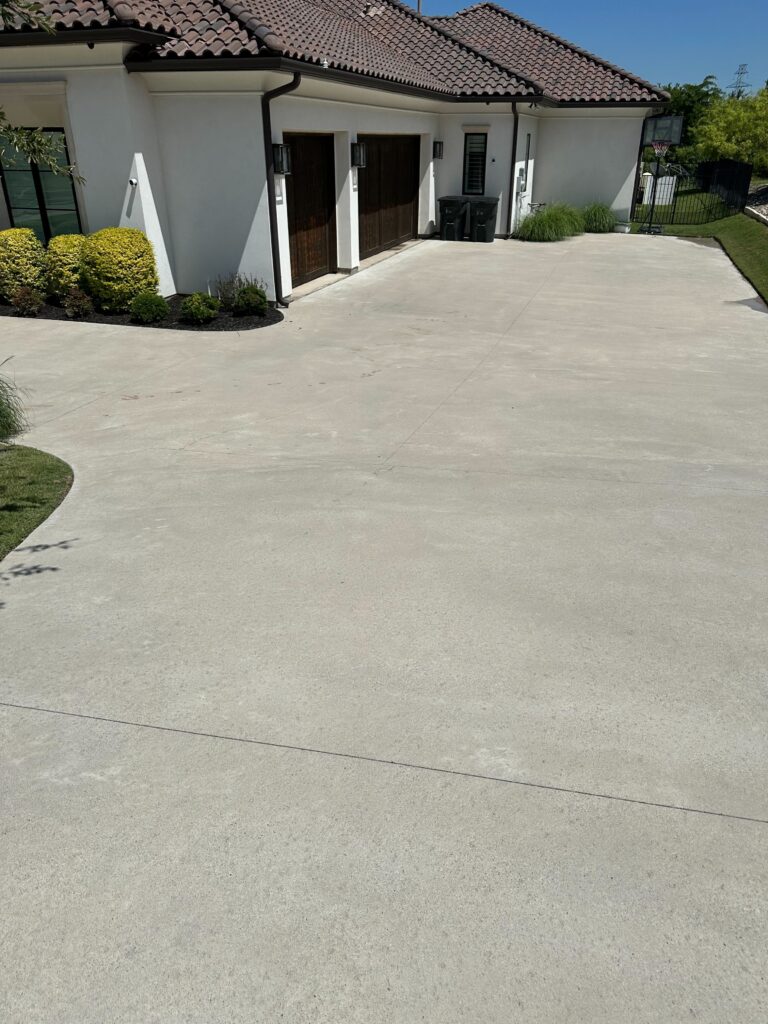
The organic growth concern is particularly important in humid and semi-arid climates where mold, mildew, and algae growth cycles are accelerated. Removing mold and algae at the root through soft washing with biodegradable cleaning solutions is the only method that produces results lasting more than a few weeks. Pressure-only cleaning of siding that has active organic growth will see visible regrowth within 30 to 60 days in most climates because the biology was disturbed but not eliminated.
Get the Right Method Applied by Professionals Who Know the Difference
Whether your home needs a full exterior soft washing to eliminate organic growth from stucco, cedar shake siding, or painted wood surfaces, or your concrete driveway and hardscapes need the deep clean that only high pressure can deliver, the right starting point is a professional who understands the difference and applies it correctly every time. Veteran-owned, PowerWash University certified, and BBB-accredited, Hartmann brings the expertise to match the right method to every surface on your property.
Call 817-986-0984 or visit Hartmann Window Cleaning to schedule your free estimate. Serving Weatherford, Aledo, Fort Worth, and all of Parker and Tarrant County, Monday through Friday, 8:00 AM to 5:00 PM.
Frequently Asked Questions About Professional Window Cleaning
The core difference between pressure washing and soft washing is in how the cleaning is performed. Pressure washing uses high pressure water, typically 1,500 to 4,000 PSI, to mechanically blast contaminants off hard surfaces like concrete, brick, and hardscapes. Soft washing uses a low-pressure washing technique at or below 500 PSI combined with biodegradable cleaning solutions to chemically break down and eliminate organic growth on surfaces like stucco, cedar shake siding, asphalt shingles, painted wood, and wood panel siding. The method selected should always be matched to the surface being cleaned.
For house washing, soft washing is the correct method for the building exterior itself. Soft washing vs pressure washing for house surfaces favors soft washing because home exteriors contain delicate materials including stucco, cedar shake siding, painted wood, wood panel siding, and asphalt shingles that would be damaged by high pressure. Professional soft house washing uses biodegradable cleaning solutions at low pressure to safely clean these surfaces while also removing mold and algae at the root to prevent rapid regrowth.
Pressure washing is the appropriate method for dense, non-porous surfaces that require mechanical force to remove embedded contaminants. Concrete driveways, brick walkways, paved hardscapes, pool decks, and metal surfaces all benefit from high pressure cleaning. For these surfaces, professional pressure washing with the correct PSI setting and surface cleaner equipment produces a thorough, lasting result that removes oil stains, organic growth, and years of accumulated grime without causing damage.
Soft washing achieves removing mold and algae at the root because the biodegradable cleaning solutions used in the process chemically neutralize the biological organisms rather than simply displacing them physically. When organic growth is pressure-washed off a surface without a chemical treatment, the root system stays embedded in the material and regrowth begins within weeks. Soft washing eliminates the biology at its source, which is why low-pressure washing technique results on stucco, vinyl siding, and cedar shake siding typically last two to three times longer than pressure washing the same surfaces.